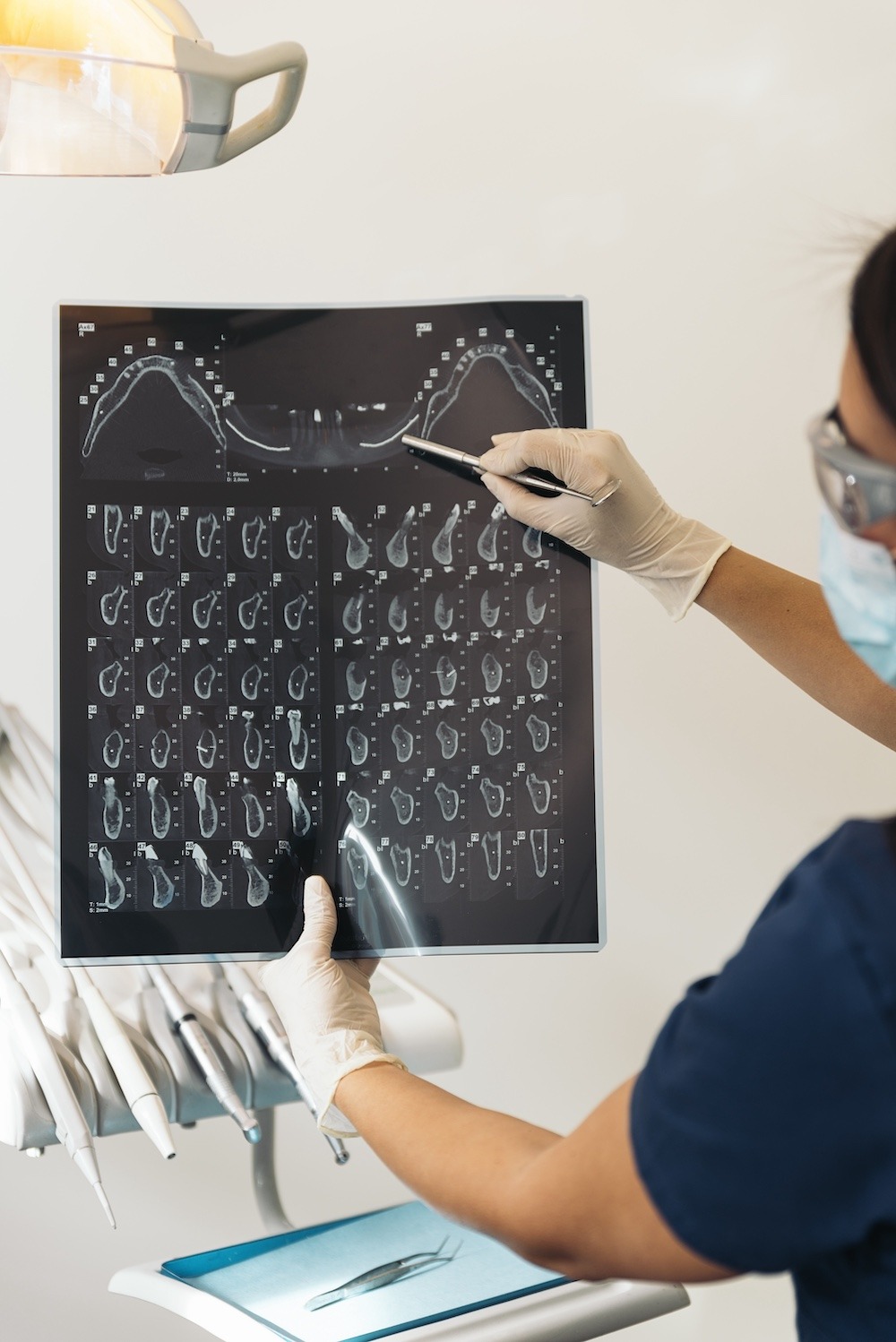
Have you ever heard your dentist say, “we need to treat tooth #14” and wondered what that means? A tooth number chart helps you visualize and identify each tooth quickly — making your treatment easier to understand and your dental decisions more confident.
At I Love My Dentist in Tijuana, we believe clarity is part of excellent (and affordable) dental care. Whether you’re planning dental implants, crowns, veneers, or simply a check-up, understanding your tooth number chart empowers you to participate in your treatment like never before.
What Is a Tooth Number Chart?
A tooth number chart is a standardized map dentists use to identify each tooth. It improves communication, accuracy, and treatment planning.
In the United States and Mexico, the most commonly used system is the Universal Numbering System, created by the American Dental Association (ADA).
- Permanent teeth = numbered 1 to 32
- Baby teeth = lettered A to T
This system is used in treatment plans, X-rays, billing, and cross-border dental care.
Why Patients Should Understand Their Tooth Number Chart
Knowing your tooth numbers helps you:
- Understand which tooth is being treated
- Follow your treatment plan with confidence
- Compare quotes between clinics
- Communicate clearly between dentists in the U.S. and Mexico
If a dentist says “crown on tooth #19,” you’ll know exactly where it is.
How the Universal Tooth Numbering System Works
Here’s the simplest way to understand it:
Upper Teeth (1–16):
Start at your upper right wisdom tooth (#1) and move across to the upper left wisdom tooth (#16).
Lower Teeth (17–32):
Start at your lower left wisdom tooth (#17) and move across to the lower right wisdom tooth (#32).
Examples:
- #1 = upper right third molar (wisdom tooth)
- #8 and #9 = upper central incisors (your two front teeth)
- #19 = lower left first molar
- #30 = lower right first molar
This is the system used at I Love My Dentist for all dental treatments.
Common Tooth Number You’ll Hear in Treatment Plans
| Tooth Number | Tooth Name | Location / Importance |
| #8 and #9 | Central incisors | Upper front teeth — aesthetics |
| #6 and #11 | Canines | Support bite and smile shape |
| #14 and #15 | Upper molars | Chewing strength |
| #19 | First molar | Key chewing tooth (lower left) |
| #30 | First molar | Key chewing tooth (lower right) |
This helps you understand estimates for crowns, implants, veneers, fillings, and more.
Other Numbering Systems Around the World
While the Universal system is standard in the U.S. and Mexico, some countries use:
- FDI World Dental Federation System
- Palmer Notation
At I Love My Dentist Tijuana, we use the Universal Tooth Number Chart to keep communication consistent for U.S. patients.
Interactive Tooth Number Chart
Explore permanent teeth by number. Click on any tooth to view its name, location, and suggested treatment information.
Select a tooth
- Click a tooth number to load information.
- This chart helps patients understand their dental treatment plan.
- Useful for implants, crowns, veneers, root canals, and emergencies.
How to Read a Tooth Number Chart
The universal tooth numbering system assigns numbers 1 through 32 to permanent teeth. Dentists in the United States and Mexico use this system to identify each tooth quickly and accurately. Understanding your tooth number chart can help you communicate more clearly about dental implants, crowns, veneers, root canals, wisdom teeth, and emergency dental care.
Disclaimer: This tooth chart is for educational purposes only and should not be used as a substitute for professional dental care. If you are experiencing pain or have concerns about a specific tooth, we recommend scheduling a consultation with our dental team in Tijuana for a proper evaluation and treatment plan.
How I Love My Dentist Uses Tooth Number Charts
During your consultation, we review your tooth chart step-by-step so you always know:
- Which tooth needs treatment
- What procedure is recommended
- Why that specific tooth is important
- How it affects your entire smile
Whether you’re visiting us for:
…your numbered tooth chart makes everything easier to understand.
We also provide printed or digital copies for transparency — perfect when comparing quotes.
Tips for Reading Your Own Tooth Number Chart
- Ask your dentist: “Which tooth number is this?”
- Look for that number on your chart or X-ray
- Take a photo of your treatment plan
- Use the same numbering when discussing quotes or follow-ups
- Save your chart to compare progress over time
A little tooth-number knowledge creates a LOT of treatment clarity.
FAQs About Tooth Number Charts
Do all dentists use the same numbering system?
Most U.S. and Mexican dentists use the Universal Numbering System. International clinics may use FDI.
Why does my child’s chart use letters?
Baby teeth in the Universal system are labeled A–T.
Do I really need to know my tooth numbers?
Yes — it keeps your treatment transparent and prevents confusion between clinics.
Why Choose I Love My Dentist in Tijuana?
💜 Clear and patient-friendly explanations
🦷 Modern technology & transparent planning
📍 Just minutes from the U.S.–Mexico border
💰 Affordable prices for crowns, implants & veneers
⭐ Most-reviewed Tijuana dentist on Yelp
At I Love My Dentist, we don’t just fix teeth — we help you understand them.
Dentist Near San Diego | All-on-4 in Tijuana | Tooth Abscess Treatment in Tijuana | Dental Emergencies Near Me